
Most businessmen we talk to didn’t start out planning to sell online. They started with a shop, a showroom, or a wholesale counter, and the website came later — usually after watching a competitor’s online store start pulling in orders from cities they’d never even sold to. That’s still the most common way an ecommerce conversation starts for us: not “I want to build a tech platform,” but “I’m losing customers to someone who has one.”
It’s a reasonable thing to be nervous about. India’s ecommerce market is now worth roughly $159 billion and is projected to more than double to $333 billion by 2031, growing at nearly 16% a year. Over 1.5 million active sellers are already running businesses on platforms like Flipkart and Amazon India, and the majority of them are small and medium businesses, not large retail chains. The shift isn’t coming. It’s already happened. The only real question left for most businessmen is how to get in without overspending on something they don’t need yet.
What an Ecommerce Software Solution Actually Changes for a Business
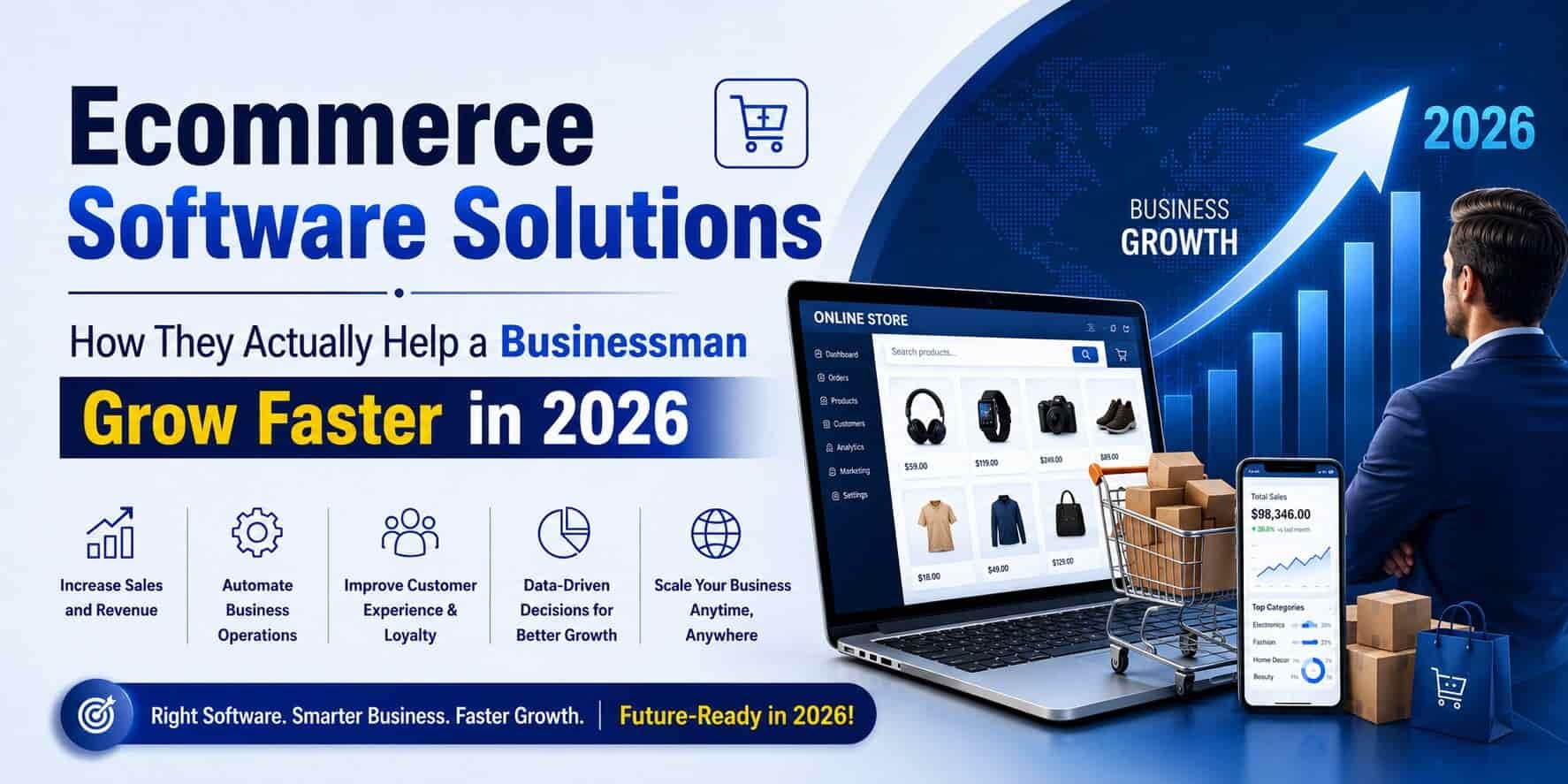
It helps to be specific here, because “go digital” is vague advice and most businessmen have heard it a hundred times already. What a proper ecommerce software solution changes is more concrete than that:
The store stays open when you’re not. A physical shop closes at night; an online catalogue keeps taking orders at 2 AM from a customer who just got paid and wants to buy right then.
One inventory, sold everywhere. Good ecommerce software syncs stock across your website, app, and any marketplace listings, so you’re not manually updating five spreadsheets every time something sells out.
Lower cost per sale than a second physical location. Opening a second shop means rent, staff, and inventory duplicated. A second sales channel online costs a fraction of that, and it doesn’t need its own electricity bill.
You actually see what’s working. Order data, repeat-customer patterns, which products get abandoned in the cart — this is information a counter sale never gives you, and it’s the difference between guessing what to stock next season and knowing.
Payments stop being a manual headache. Integrated gateways mean a customer pays instantly, the order confirms itself, and nobody’s chasing a bank transfer three days later.
None of this is exotic. It’s the same handful of advantages every established online retailer already has — the point of a good ecommerce software solution is making them available to a business that isn’t Amazon-sized yet.
Ready-Made vs. Custom-Built — the Decision That Actually Matters
This is the part that trips up a lot of first-time online sellers. They assume “build an ecommerce platform” means hiring a full development team and waiting four to six months before a single product goes live. That’s true for a fully custom build, and there are businesses that genuinely need one — a wholesale operation with complex tiered pricing, or a brand with a catalogue structure no template was built for.
But most businesses don’t start there. A ready-made ecommerce software solution gives a business owner a working storefront, an admin panel, payment integration, and inventory management already built and tested, customised to the brand rather than built from a blank page. It’s the difference between commissioning a custom-built shop counter and buying a proven one that already works, then painting it your colours. For a business that needs to be live before the next festive season, not after it, that difference in timeline is often the whole decision.
Who Benefits Most From Moving Online This Way
We’ve seen this pattern hold across a few kinds of businesses in particular:
Grocery and FMCG retailers who need fast order turnaround and can’t afford downtime during peak hours
Fashion and apparel sellers juggling size and colour variants across dozens of SKUs, where a spreadsheet stops working past a certain point
B2B wholesalers who want a self-serve ordering portal for repeat business buyers instead of taking every order over a phone call
Regional and Tier II/III businesses who have strong local demand but no way to reach the buyer two cities over
What connects all of them isn’t the product category. It’s that each one had real, existing demand that a physical location alone couldn’t capture — and the software was the thing standing between them and that demand.
The Honest Takeaway
Moving a business online isn’t really about keeping up with technology trends. It’s about not leaving money on the table that a competitor is already picking up. The businessmen who get the most out of this shift aren’t the ones with the biggest budgets — they’re the ones who picked a solution sized to where their business actually is today, and grew into more from there.
If you want know more about how it works the details are here:
https://originatesoft.com/ecommerce-software-solution/